At my first Workshop on Algebraic Complexity Theory (WACT) in Bangalore in 2019, I was just beginning my journey in algebraic complexity, unsure how to start a conversation with the pioneers of the field. Seven years later, I was sitting with Avi Wigderson in Copenhagen, listening to him talk about the people and ideas that made research a joy for him.
What stayed with me was the affection with which Avi spoke about Noam Nisan. He talked about the pleasure of working together and the sadness he felt when Noam moved into a different area. It made me appreciate how much a collaboration can mean to someone, long after the papers are written.
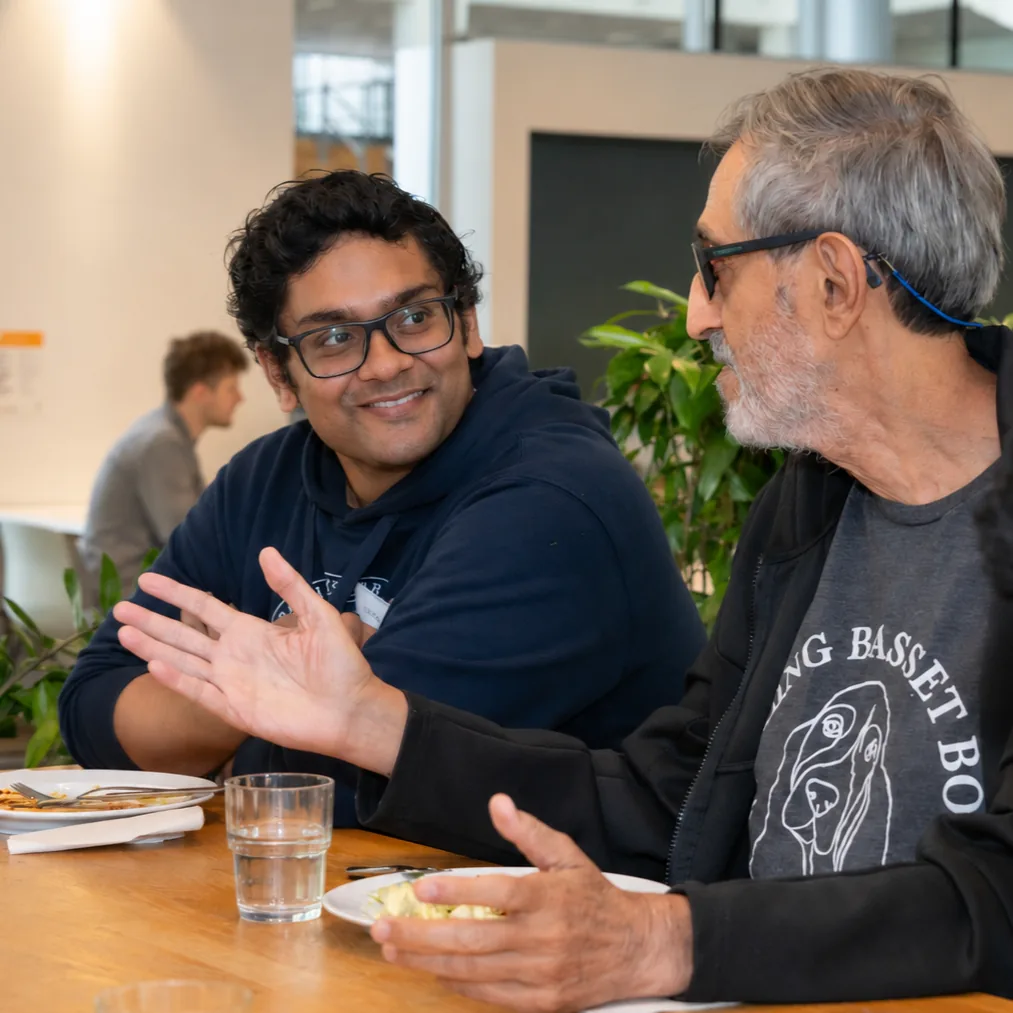
“We are hosting WACT this time,” Nutan told me when we met in January, after I returned to Copenhagen following my wedding in India. When she asked if I wanted to help organise it, I said yes immediately. The workshop had given me a way into this community, and now I had a chance to help make it welcoming for others. Its ninth edition would take place in Copenhagen from 2 to 5 June 2026.
The work began quietly, with occasional meetings and invitations sent out. Then the replies started arriving. As speakers confirmed, the workshop we had been imagining became a gathering we would soon be responsible for. For our organising team—Amik Raj Behera, Nutan Limaye, Srikanth Srinivasan, Amir Yehudayoff, and me—the question was how to make those four days worth the journey for everyone attending.
Shaping the Programme
We looked through recent conference proceedings and DBLP pages for results that would interest the algebraic complexity community. Soon we had more potential talks than we could fit into four days. The difficult part was choosing a programme that reflected the range of work in the field, knowing that many worthwhile contributions would still have to be left out.
It became easier once we started thinking in terms of themes. We gave each day, and then each session, a broad direction. Longer survey talks could anchor a theme, while shorter talks presented recent work around it. That helped us think about how each talk would fit into the programme participants would experience. We hoped that grouping related talks would help participants see connections between results and carry ideas from one session into the next.
We also made a conscious effort to give preference to student presenters. Nutan encouraged us to reach out more widely to women in the community and consider what support would help them attend. Her suggestions helped us broaden our search for speakers as we worked through several versions of the programme. As organisers, we took on the responsibility of giving the stage to newer and underrepresented members of the community.
The final programme ranged from the permanent and determinant to proof complexity, polynomial identity testing, tensor methods, coding theory and parallel algorithms. We had tried to balance surveys that would help participants explore less familiar topics with new results for those already working on them.
Making Four Days Work
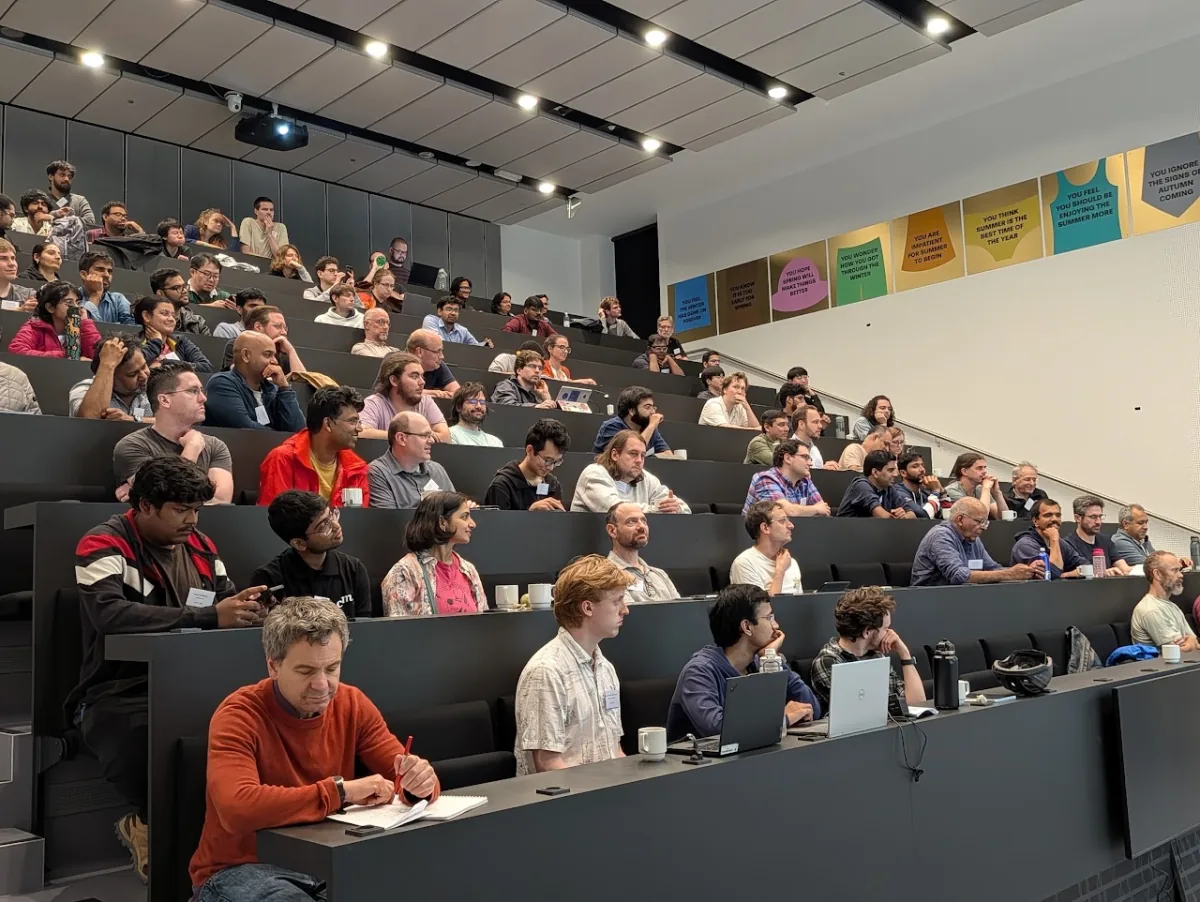
Research workshops of this kind are often five days, but Amir suggested keeping ours to four. I appreciated how often his ideas came from imagining what it would feel like to attend. Participants liked the shorter format despite the packed schedule, which made me think four days was worth keeping for future editions. I came away more conscious of how much a full programme asks of its audience, especially those travelling long distances or balancing other commitments.
Those travel plans were unusually fragile in 2026. The war in the Middle East disrupted flight routes, reducing capacity and making tickets both expensive and uncertain. I had never imagined geopolitics entering the planning of a workshop on such a niche topic, but it did. Every invitation now came with the uncertainty of whether participants could afford the journey or count on getting here. Working through these arrangements took more time than I had expected, and I came to appreciate how much easier it was with Srikanth alongside us. Whenever we were unsure how to proceed, he was quick to make a decision that helped us move forward.
Encouraging Participation
We introduced a poster session for the first time at WACT. We wanted to give people a chance to hear a little about the work before they had to choose which posters to visit. Amik suggested asking every presenter to give a two-minute preview while everyone was still seated together.
It worked far better than I expected. Each short presentation gave the room a question, an idea or simply a poster to remember. By the time the poster session began, people already knew which conversations they wanted to continue. The reception around the posters helped too.
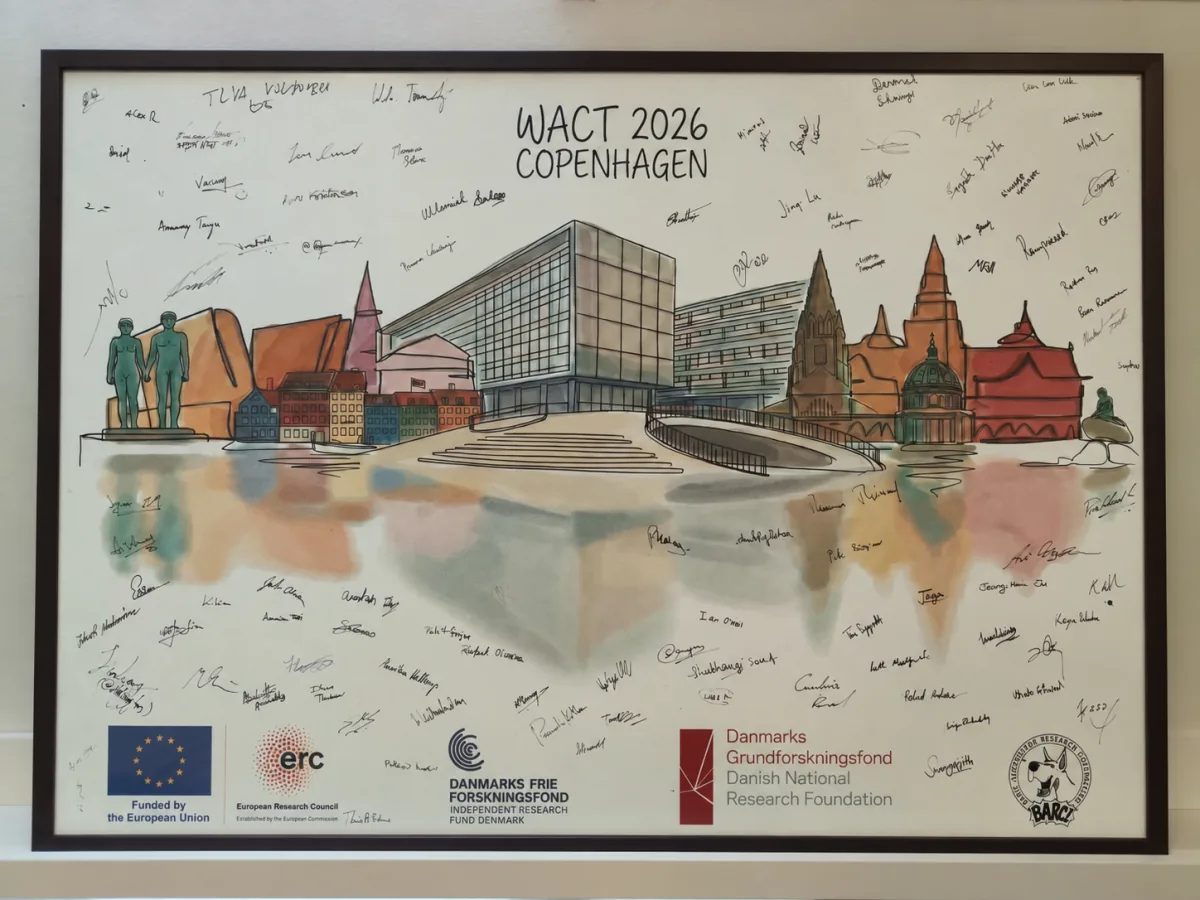
Amik’s enthusiasm was infectious, and he was often a day ahead of us, finishing things we had planned to tackle the next day. He brought fresh ideas from his own experiences too, including the suggestion that we make a WACT 2026 poster for everyone to sign as a keepsake of our time together. That poster is now framed and hanging proudly at Basic Algorithms Research Copenhagen (BARC), and the signatures bring back the people who made those four days memorable. His help continued even while I was putting this post together, with the photographs you see here.
A Result Arrives During the Workshop
The talk that grabbed the most attention was not in the original programme. The week before WACT, a visitor hinted over coffee that Rohit Gurjar was part of a group that had solved a major open problem and was surprised that Rohit had not asked for a slot. At WACT 2016, Rohit had presented joint work showing that bipartite perfect matching is in quasi-NC. Knowing his deep passion for the problem, we guessed that they might have improved the result to NC.
By the second day, Rohit had asked whether there might be time for a talk. We already had possible slots in mind, though it remained uncertain for a while whether the talk would happen. On Thursday, we shortened lunch to make room for a thirty-minute presentation of Bipartite Matching is in NC, joint work by Abhranil Chatterjee, Sumanta Ghosh, Rohit Gurjar, Roshan Raj and Thomas Thierauf. Rohit presented the proof and explained how the authors had arrived at it.
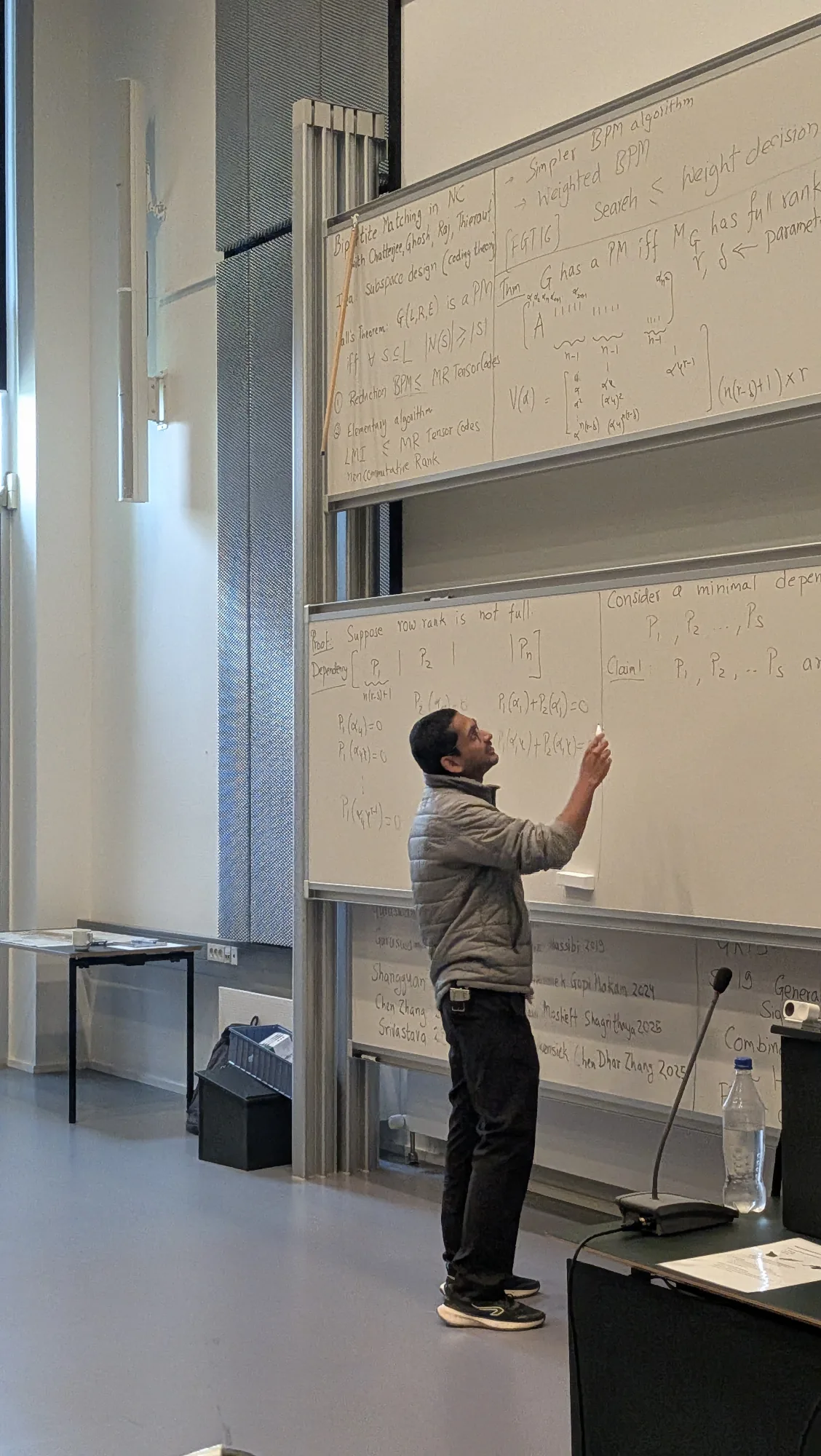
It was a beautiful piece of work to witness unfolding in front of us. The paper would appear later, but those of us in the room were hearing the proof and the story behind it while the discovery was still fresh. I have rarely seen a theory audience produce anything resembling a fan moment, but people were taking photographs with Rohit afterwards. We had spent months putting the programme together, yet this was a moment we could never have planned. Being able to make room for it was one of the most satisfying parts of organising WACT.
If you are curious about this result, I would point you to a post on the Computational Complexity blog by Nutan Limaye and Thore Husfeldt, where they explain its significance in more detail.
What I Would Change
Looking back, I wish we had made more room for discussion. I am glad we put so much care into the talks, but participants could return to the slides and recordings long after going home. The chance to work through an idea together was harder to recreate. Alongside the conversations over coffee and lunch, I would have liked to set aside time for people to stay with a question and see where it led.
We began collecting open problems in a shared Overleaf document so that participants could take home something concrete to work on. I have seen papers credit problem collections from earlier workshops, and more than one of my own PhD papers made progress on questions raised at such workshops. Yet we struggled to encourage contributions to our document. Some of that may simply have been the effort of writing a problem up, but I now worry that advances in generative models will make people more hesitant to share questions they are actively pursuing. Organisers and volunteers could take on a more active role in this by gathering open problems from the talks themselves.2 Often, the next open problem is already there in the closing remarks of a talk or a question from the audience.
I am also less convinced now that a long lunch break is always the best way to make room for informal conversations. For a future workshop, I would consider a shorter lunch and an earlier end to the programme for the day. That could give participants a longer stretch afterwards to talk without watching the clock or saving attention for the next lecture.
I kept thinking, too, about what the workshop felt like for someone attending for the first time. I remembered how easily a room full of experts and experienced researchers could look like a room full of people who already knew one another. We organised senior–junior lunches to lower that barrier. Nutan held a separate lunch for women participants, and the poster reception gave students another natural way to take part. These initiatives helped, though I think we can do more. I would like someone arriving as unsure as I was in Bangalore to find it a little easier to join a conversation.
Worth the Time
A few weeks later, the organising team went out for dinner. Someone asked whether I would do it again, knowing how much time it demanded. I said yes immediately.
Organising WACT took time away from research, but I do not consider that time lost. It showed me that there are more ways of contributing to this community. I could help make room for a student to present their work, for an unfinished idea to find a collaborator, or for an unexpected result to be shared while it was still fresh. WACT had given me a place to begin in 2019. Helping make that possible for someone else felt worth the time.
Thank you to all the volunteers whose care and effort made the workshop possible, and to everyone who took part and gave those four days their warmth and energy. It was a pleasure to help bring you together.
Margin comments
The hook for sliding the boards proved harder to untangle than the proof, so with time running short, Rohit left it hanging. ↩
For WACT 2026, some of us have already begun revisiting the talks to put together a more comprehensive list of open problems. ↩